

Woodworking was not a pursuit or a career for me—it was, and is, my life.
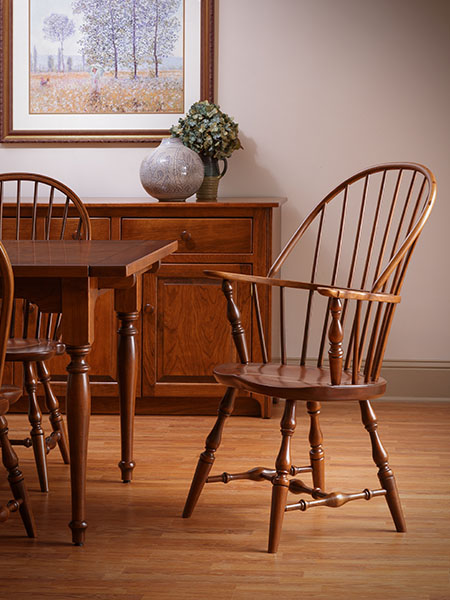
I was born into a family of woodworkers, specifically furniture makers. My dad began making furniture for his brother as a teenager. Running the lathe and turning legs and spindles for chairs, and many other tasks. Together, they built handcrafted dining chairs, tables, and other pieces. Starting out with the more classic Windsor and early American style chairs. As the business grew, my dad opened his own shop, focusing on classic Windsor-style chairs and similar work for my uncle’s business.
I grew up in the woodshop—surrounded by the smell of freshly cut wood, playing with scraps, gluing pieces together, and slowly learning what it meant to craft and to build. I wanted to help make chairs, so I took on small tasks where I could—using a hammer to break off wedges on tendons, sanding legs, and yes, I also had to sweep the floor.
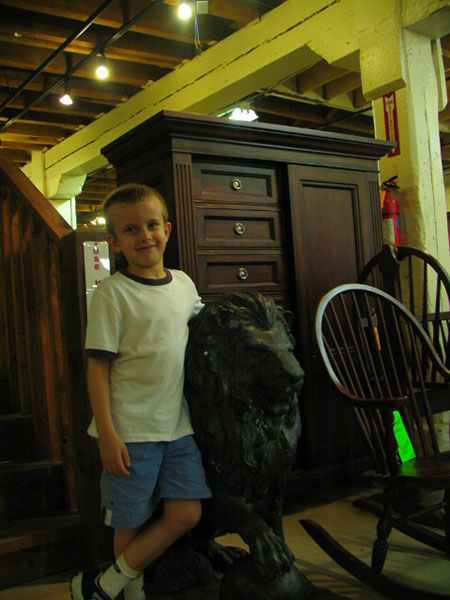
I also spent time traveling to deliveries and visiting furniture stores, seeing firsthand the world of furniture. I did not fully appreciate all the aspects of the woodworking world yet, but my canvas of knowledge of furniture was starting to be shaped. My young days were spent playing in the shop, tinkering around with wood, and helping where I could.
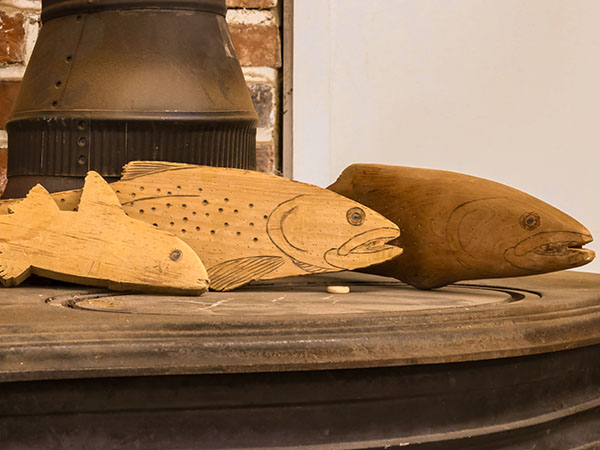
Some of the first projects I loved to make were fish. I was drawn to them, watching them, so naturally I began making them. At first cutting crude fish shapes out of boards, then more refined forms, learning to woodburn details, and eventually shaping them with tools into something more lifelike.
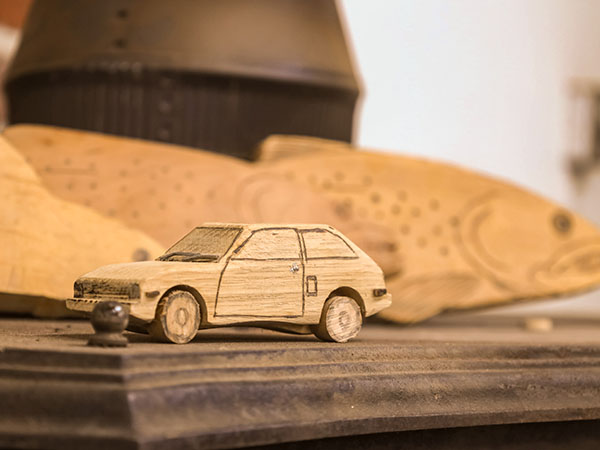
In the meantime, I made whatever I could imagine—boats, small objects, even a “wooden weed eater” during a phase when I thought it was the coolest machine in the world. As my skills grew, I began making cars and trucks—one of which was my version of a 1979 Ford Fiesta (every boys dream car I know....still not entirely sure why I chose that).
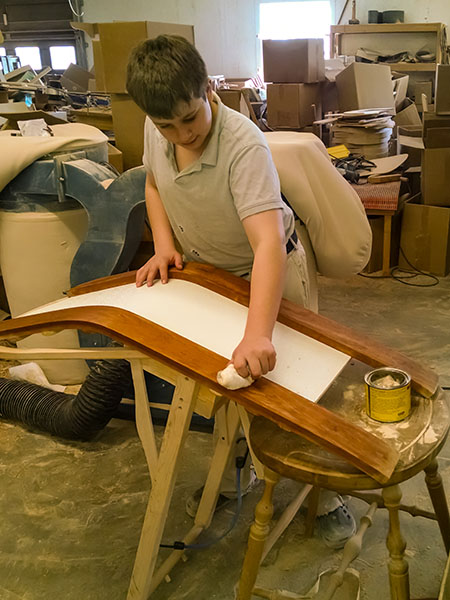
Me finishing up a Wood Dog Sled I designed for our Saint Bernard to pull me in....(it actually worked ok)
As a teenager, I became more involved in the chair-making process, helping build classic Windsor chairs from raw blanks into heirloom furniture. My days were split between school and the shop—coming home each afternoon to work for a few hours. Every week I helped to build dozens of handmade chairs, refining my skills and upgrading through machines I was allowed to run as I could.
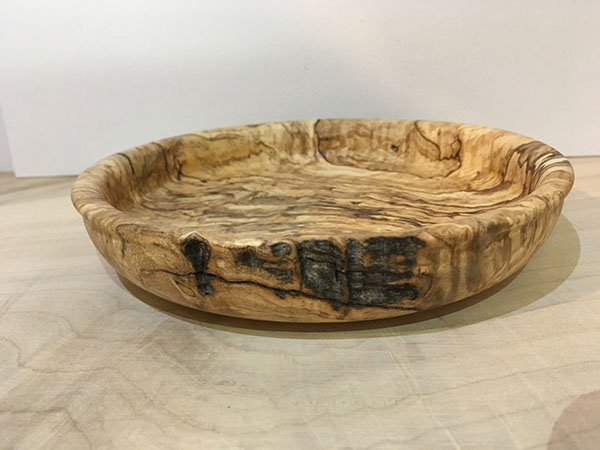
Toward the end of high school, I became interested in lathe turning. I dusted off my dad’s lathe and began with simple bowls. Before long, friends started asking if I could make pieces for them. I began selling $5 and $10 bowls—my first introduction to business.
There was something deeply meaningful in that moment—creating something with my hands and having someone else recognize its value. That experience stayed with me.
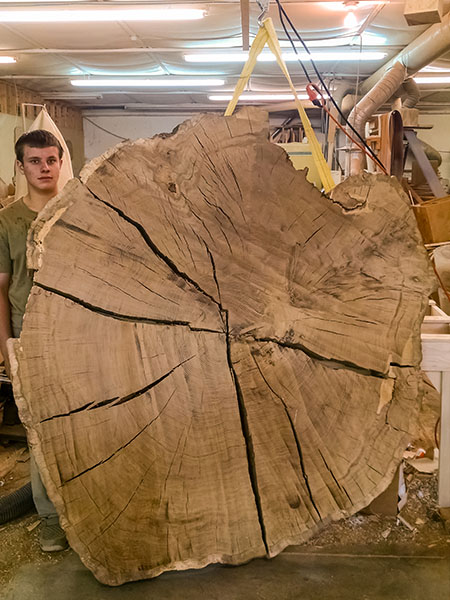
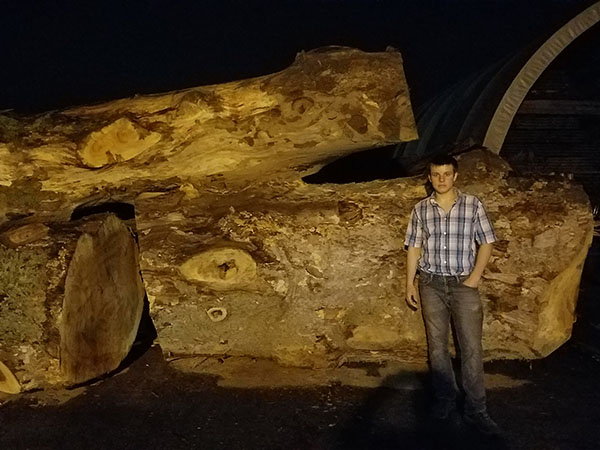
At this point, I was involved in nearly every part of the chair-building process, continuing to refine my skills in fine furniture. Around the same time, my uncle’s business, Zimmerman Chair Shop, began working with live-edge slabs as that market emerged. My dad was asked to build tables from these slabs, and I became part of that process—removing bark, shaping edges, sanding, learning to hand-cut wooden crack-securing butterflies, and many of the other details that go along with that. It was a completely new realm of woodworking, and I loved it. A slab, almost like a canvas for you to put your craftsmanship on.
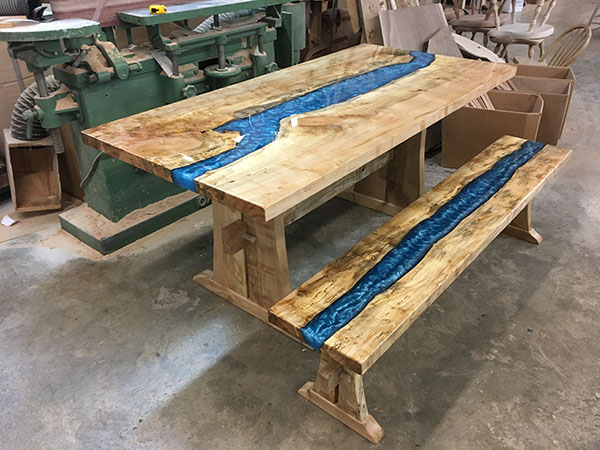
Eventually, river tables began to take hold in the furniture world. In 2017, we built our first. It had its challenges—some leaks along the way—, but it came together in the end. We continued building them over the following years, each one improving on the last.
Back to my lathe turning, up to that point, my “clients” had mostly been friends. A small and ever-decreasing client pool, so at 16–17 years old, I was wondering how do I sell these to anyone, not just people that know me?
I discovered Etsy and decided to open a shop.
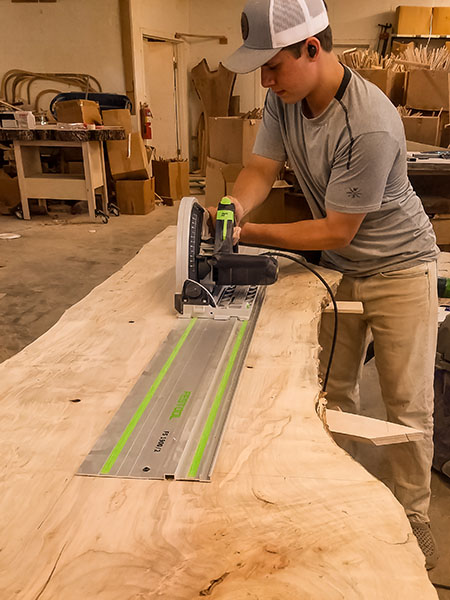
At the time, I noticed floating shelves were gaining popularity, so I began building them. My offerings included bowls, bud vases made from live-edge scraps, and floating shelves. This is where the table building helped give me a head start, number one, I was learning the skills and techniques in working with live edge, and we had various cutoffs from those builds that were, for the most part, useless....but not to me. I worked on chairs during the day and built products for Etsy whenever I had time.
I still remember hearing the Etsy “cha-ching” notification one evening and seeing that I had sold two figured maple shelves to one customer. The total was just over $400—more than I had ever made on a single sale. That moment was pivotal. To create something, share it online, and have a complete stranger choose to bring it into their home—it was something I didn’t take lightly. I
was hooked.
From there, I began transitioning into tables. With a few reviews and some early momentum, I listed custom live-edge river tables. My first order came from Tennessee—a maple river table with a blue epoxy river and a maple trestle base.
That project came with its own lessons. Shipping delays with my first freight shipment, relaying all that to the customer....but in the end, it arrived, and the customer loved it. “All is good that ends well” they say, so we moved along. Over the following months, more commissions came in, and I began building a portfolio.
By 19 (2020), I was fully focused on growing the business. I was fortunate to have access to a well-equipped shop—something I didn’t take for granted. Over the next few years, the work continued to evolve.
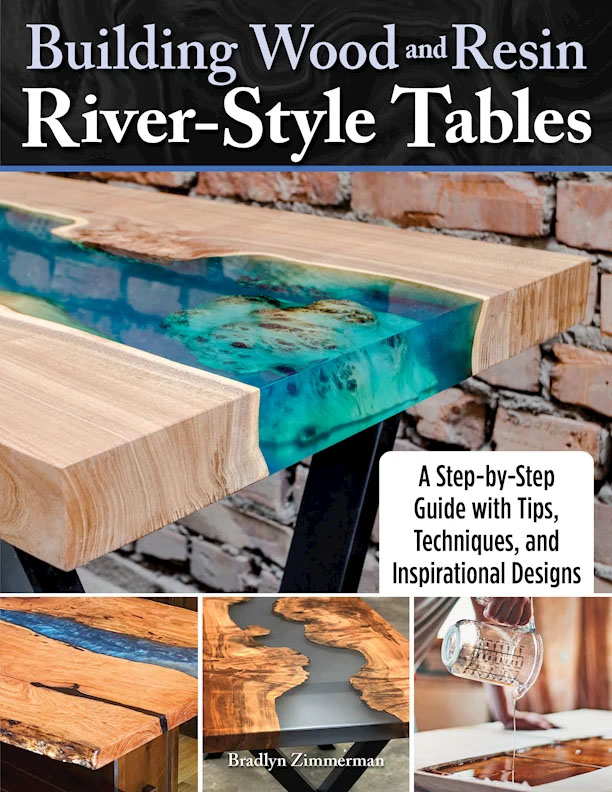
In 2021, I was contacted by a publisher with an unexpected opportunity: to write a step-by-step book on building river tables. It hadn’t been something I had considered, but I had always enjoyed writing, and by that point, I had developed a deep understanding of the process.
After submitting a few chapters, I was offered the opportunity. I spent significant time building three tables specifically for the book, documenting each step along the way. The book was published the following year.
As the business continued to grow, so did my perspective. We went through several logo revisions, gradually refining the identity of TheOleWoodShack. But over time, it became clear—the name no longer reflected the work.
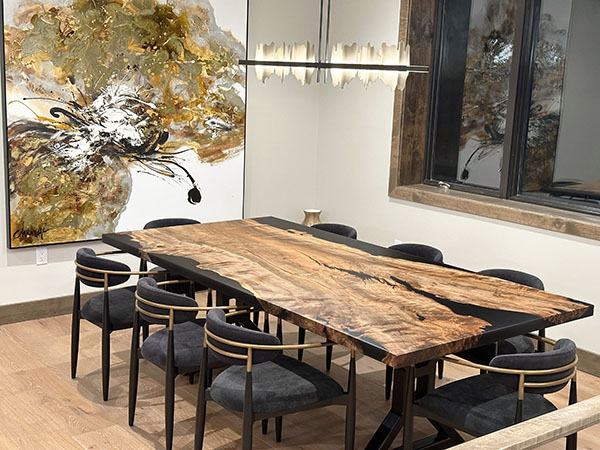
What began as a small shop making rustic shelves and bowls had evolved into something more custom and considered. We were now building premium tables, such as one of our last deliveries to NYC, a solid walnut table, base to top, with premium walnut sourced from Oregon, or one of my favorites, a gorgeous Western Big Leaf Maple Slab, built into a 12’ Dining Table in the hills of Los Angeles, overlooking the city. The name was not fitting anymore, even though I did not want to completely admit it.
The work had changed. The name had not.
Around this same time, my life began to change as well.
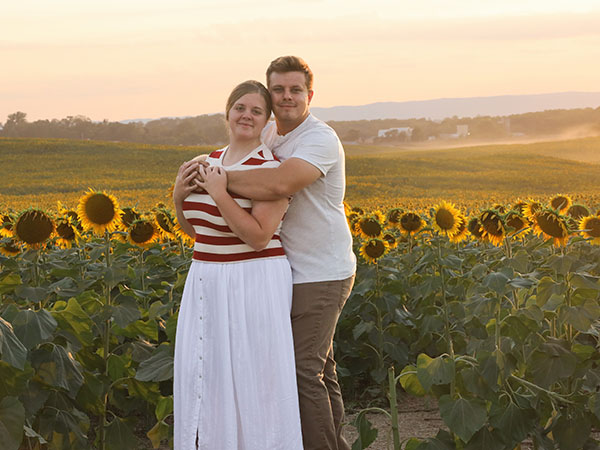
I met a woman from Washington. After many cross-country flights, I married the love of my life, my beautiful wife, Sharonda, in January of 2025. With that came a new chapter. I left the shop that had shaped me and taught me, and began working out of my own space, near the Allegheny Mountains—continuing to build, but now in a space focused only on my builds.

And so, Vestige Furniture Studio was born.
I wanted a name with meaning—something that spoke to the material itself.
Vestige (noun): a trace, mark, or visible sign left by something that has vanished.
My work begins with carefully selected wood—each piece shaped by years of growth, by sun, by storm, by time. These are vestiges of the tree. What remains is not just material, but history. Through craftsmanship, I aim to preserve that trace—to elevate it. To reveal the quiet, enduring beauty that already exists within the wood.
I hope you have enjoyed learning about my life in woodworking and what has brought me to this point. It is not a traditional journey. I started, step by step learning to make Windsor chairs, a delicate and fine furniture craft, and transitioned into a more artistic style of furniture craft, a 180 turn around of the usual journey. I hope to make use of the skills and knowledge of all these parts of my woodworking life and bring a fine furniture eye and touch to the world of Custom Furniture, specifically Live Edge Tables.